

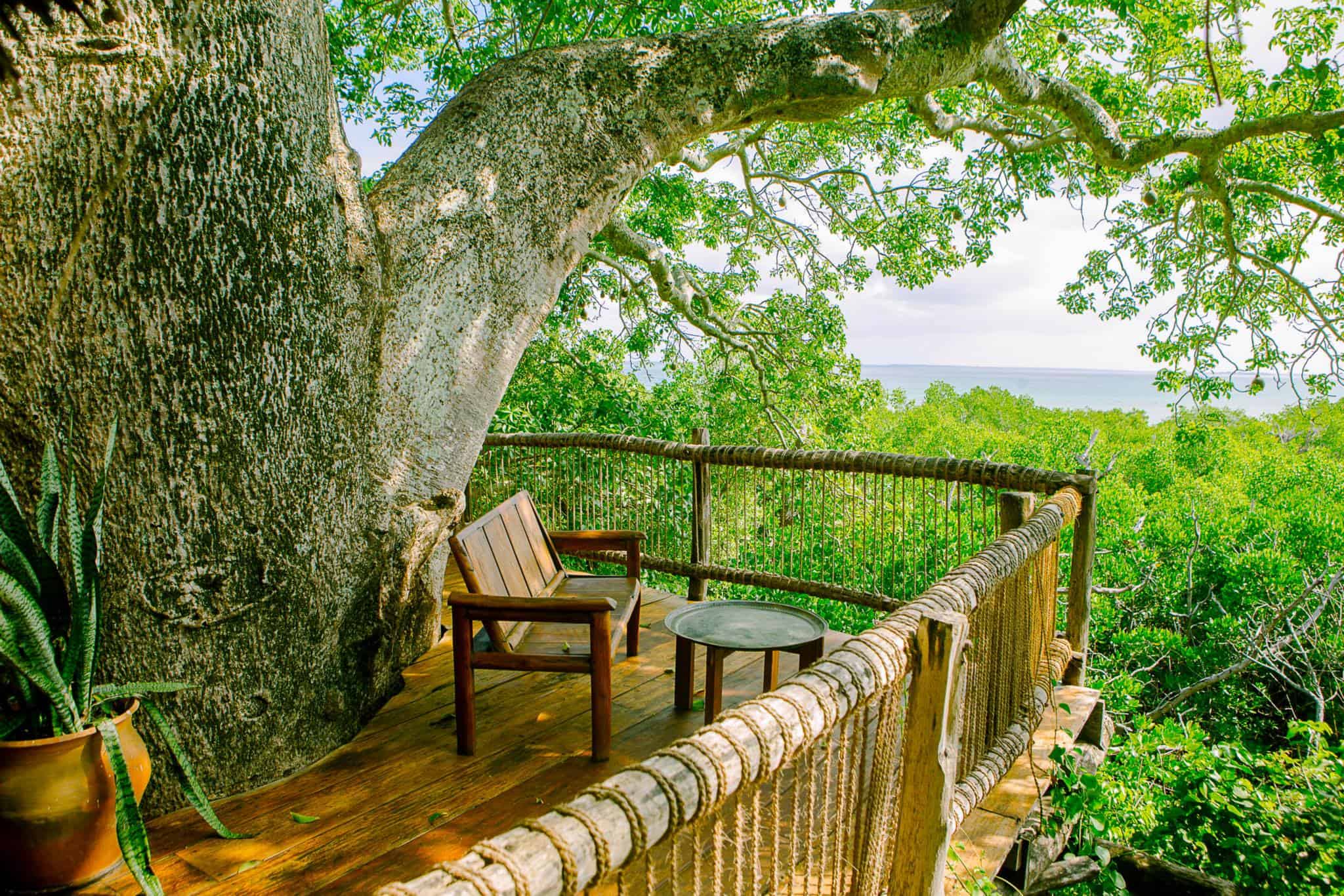
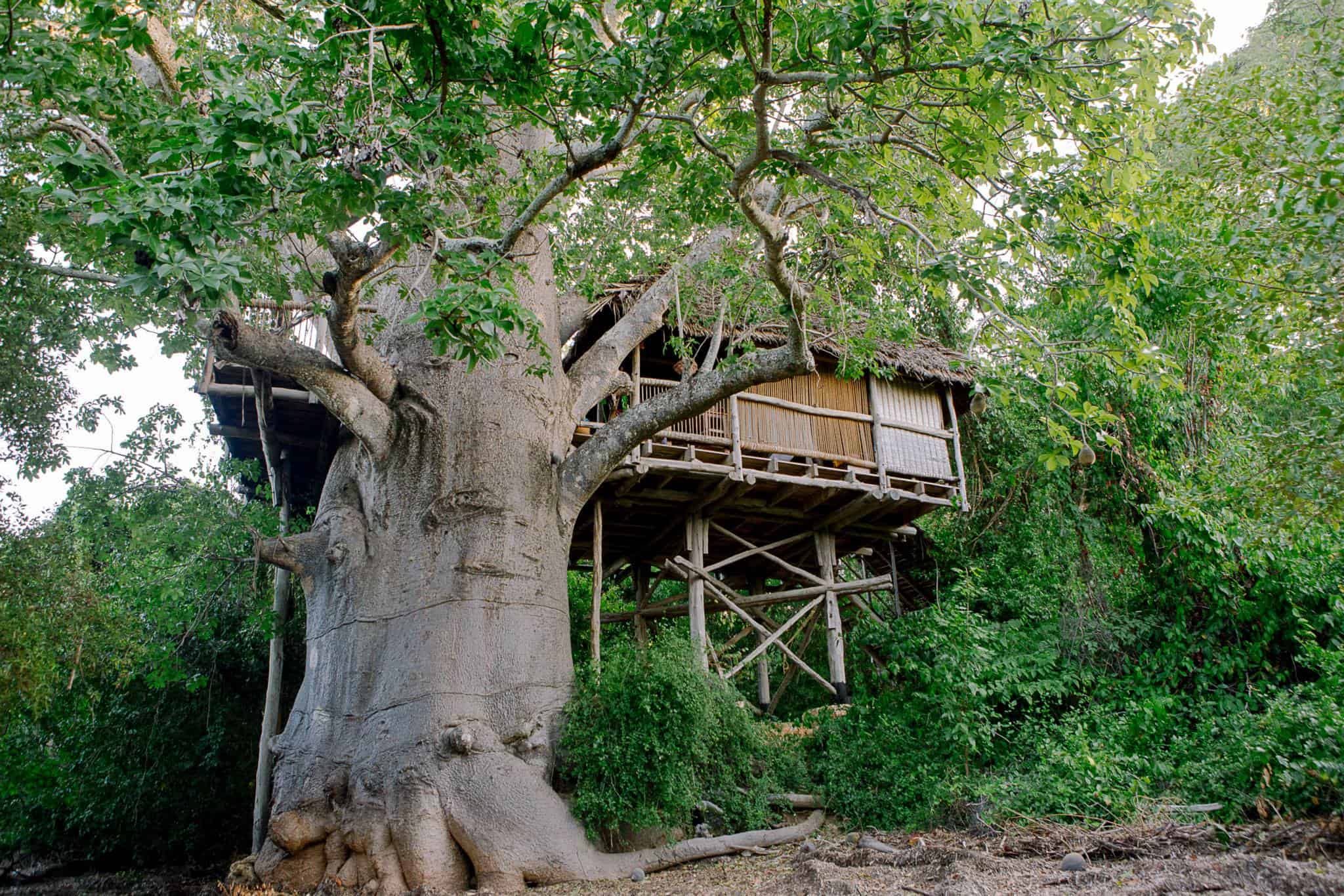
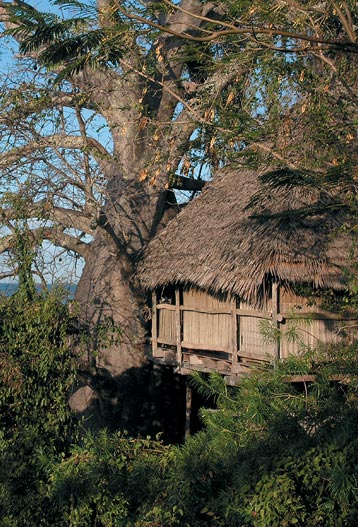
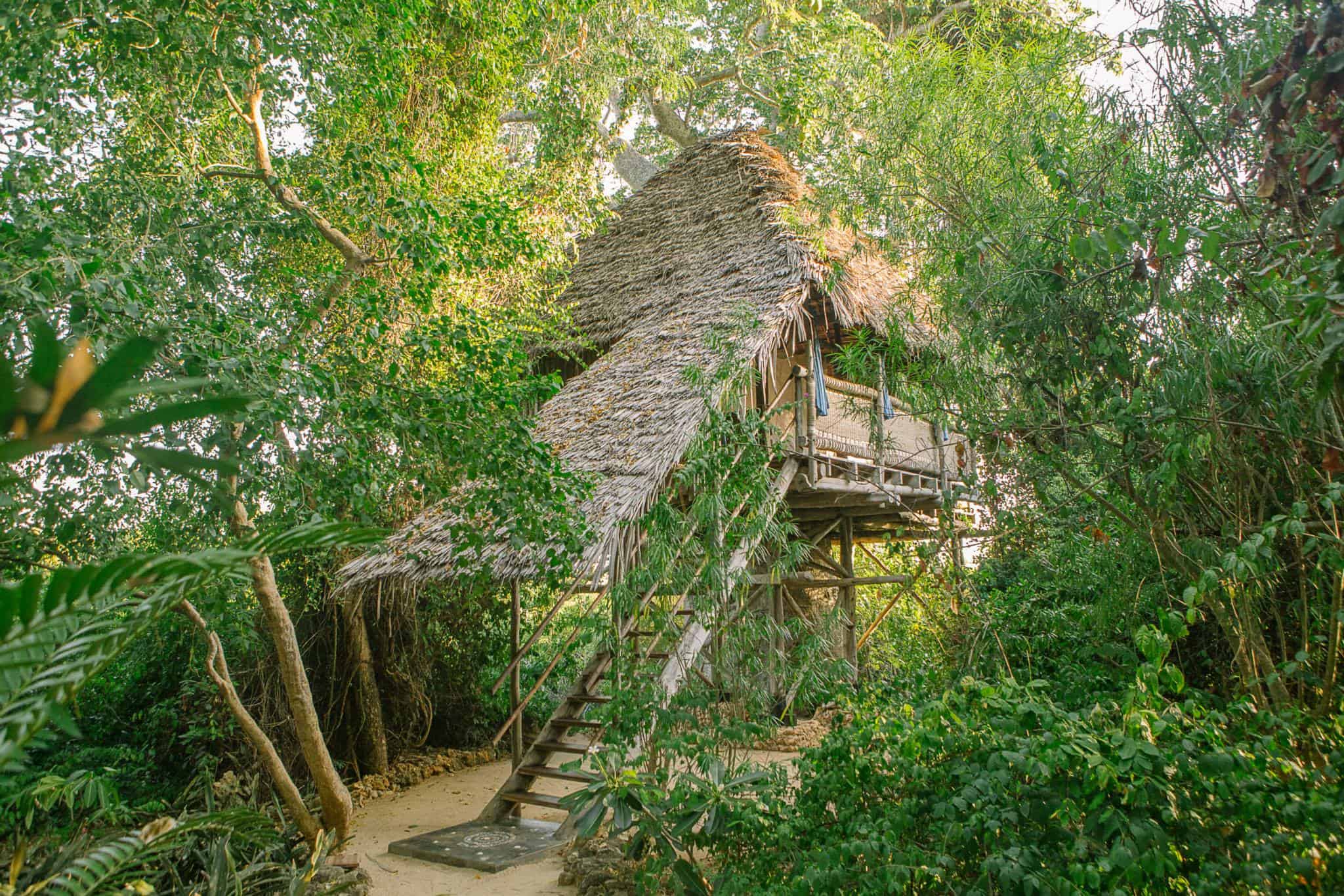
MOJA sits in the arms of a sea-rooted baobab above Kinasi Pass, on the small, car-free island of Chole off Tanzania's Mafia Island. You reach it by dhow — salt air, a silver wake, mangroves closing in on either side. The island announces itself quietly, and the treehouse does the same.
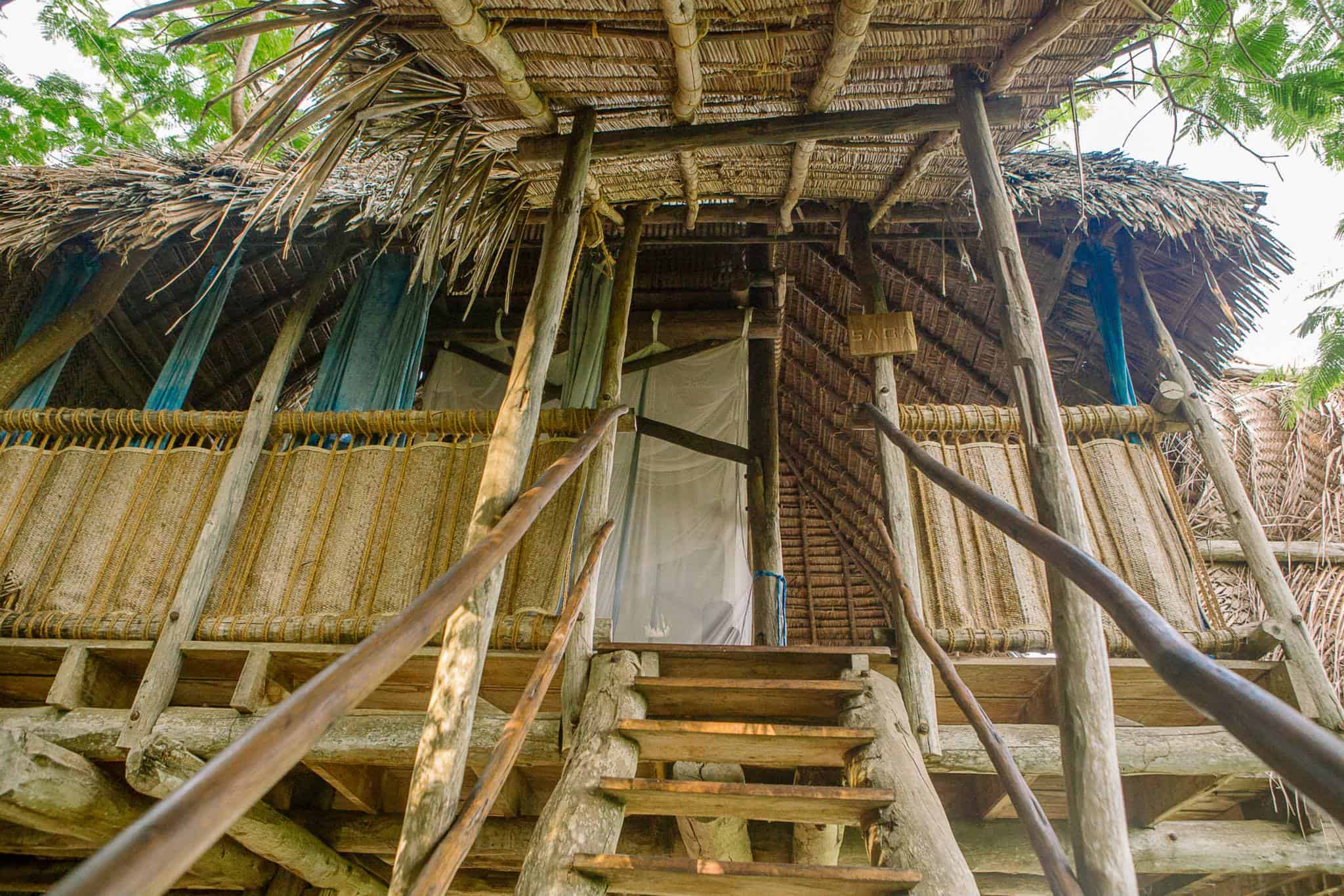
Chole Mjini is the property that holds MOJA and five companion treehouses, plus a single ground house. Every structure here is handmade — poles cut by hand, planks cured in the sun, timber ferried in on dhows, materials sourced from Chole's own traders. That process shapes a local micro-economy as much as it shapes a hotel. A craftsman's joint, slightly off-centre and beautiful because of it, tells you more about this place than any brochure could.
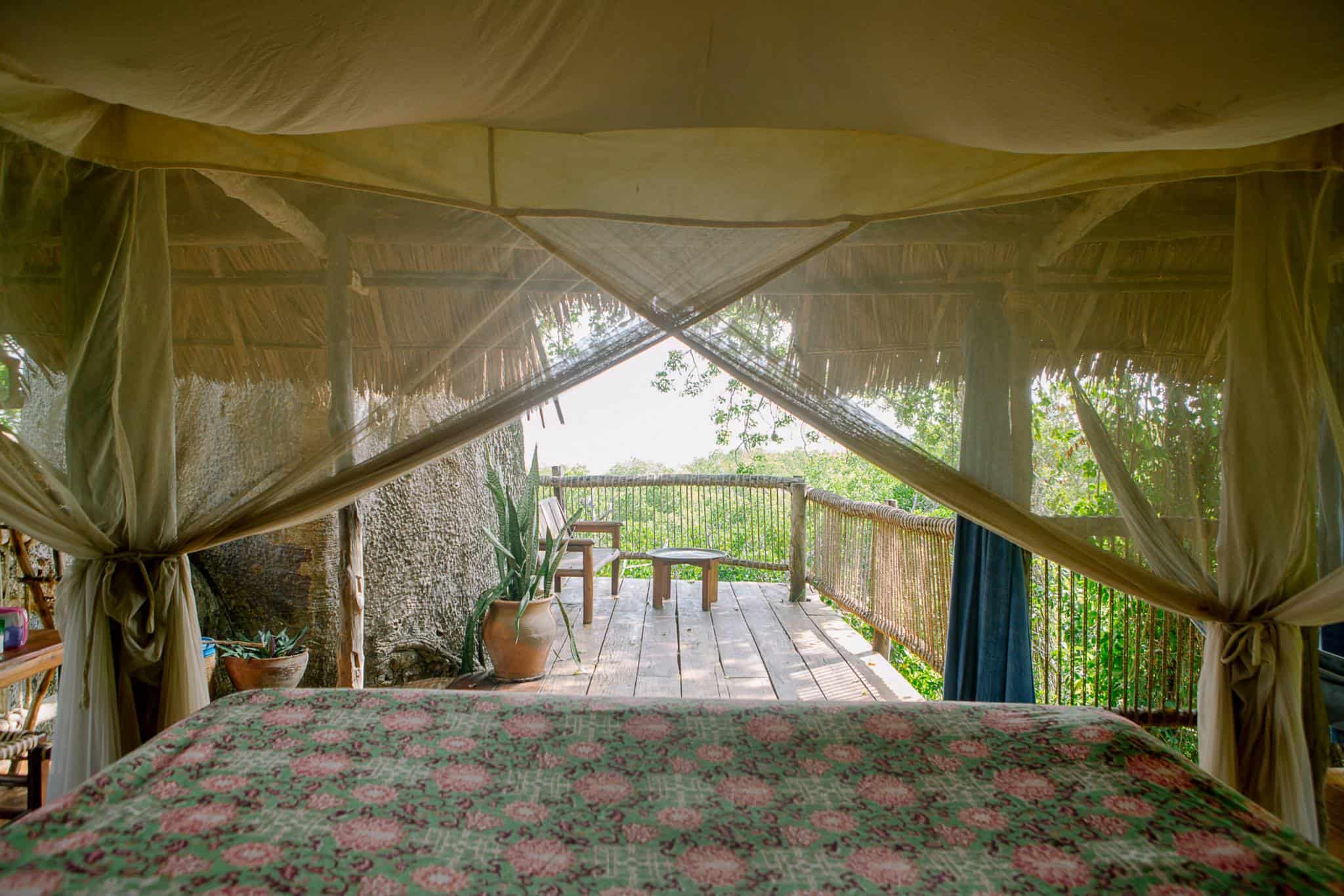
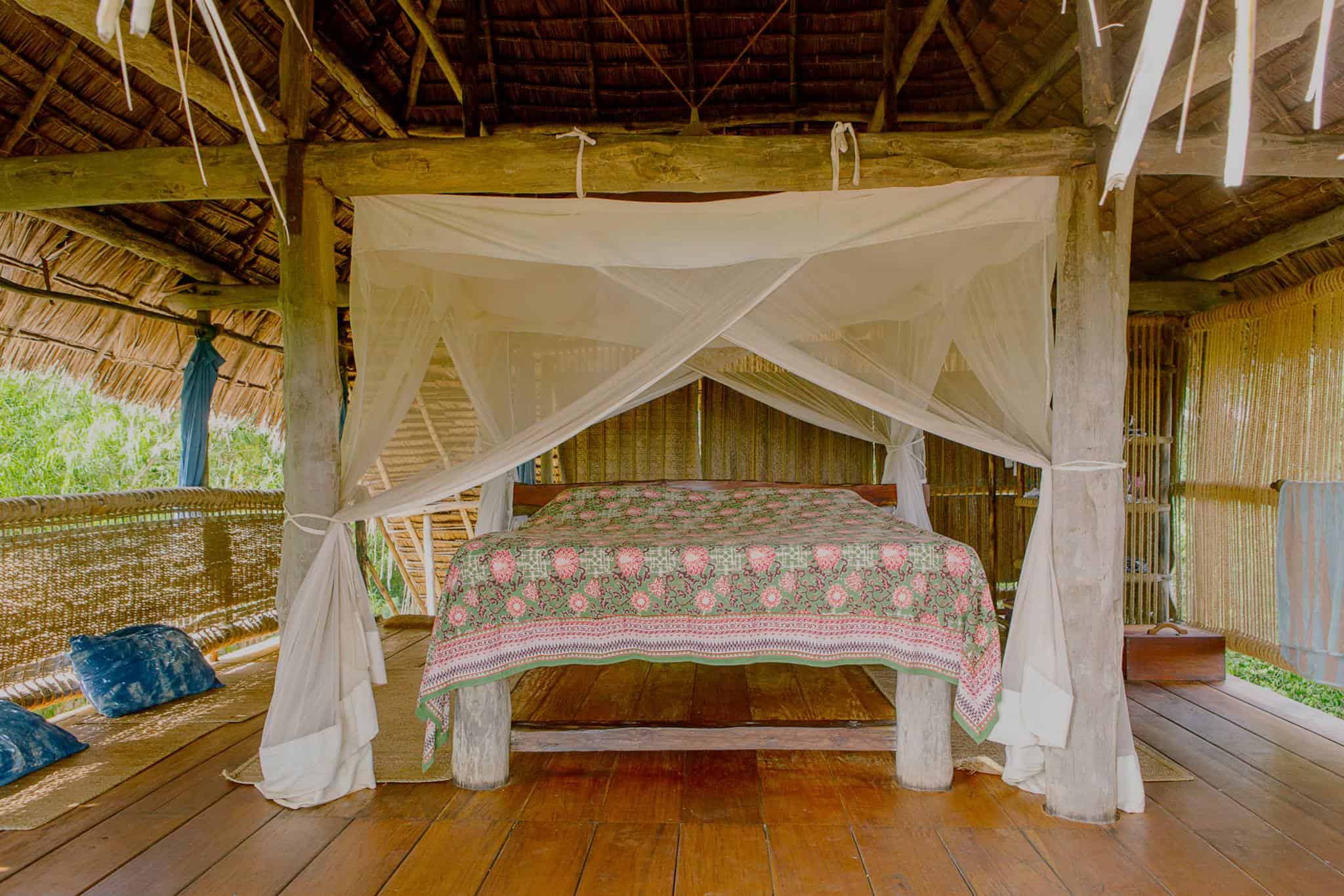
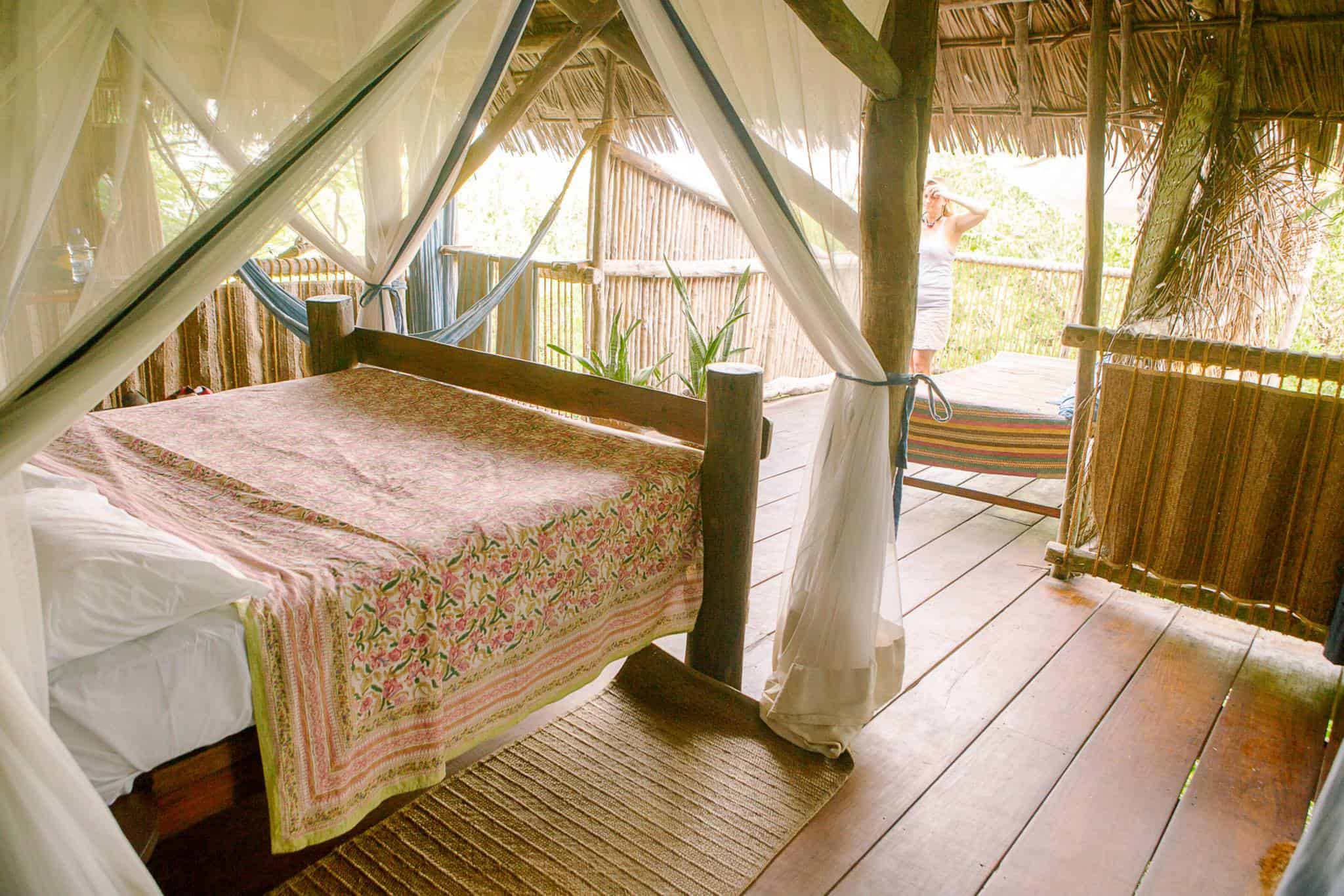
MOJA — the Bantu word for "one" — is the most singular of the six. The treehouse occupies one open level, anchored by a king bed turned toward the light and the pass beyond. There are no walls to speak of, just structure and air and the view constantly rearranging itself. At low tide, sandbars draw pale maps across the channel. At high tide, water shoulders past the mangroves and glints below the baobab roots. Kites ride thermals above the crown; sometimes a Fish Eagle calls. After dark, fireflies mark the dark with brief, bright script, and a lantern or two is all the light you need.
The bamboo-grove shower deserves its own mention. Tucked into green shade, it filters sunlight through the canes and gives you the faint, peppery scent of crushed leaf underfoot. Bathing here feels less like a routine and more like a pause. Days on Chole run the same way — unhurried breakfasts, walks past coral-stone ruins, afternoons that slow right down. The dry season, roughly May through September, brings the clearest nights and the most comfortable open-air conditions; the wet months from November to March run hotter and more humid but reward guests with vivid green landscapes and dramatic skies.
Rates for MOJA run approximately $450–$550 per night, varying by season and availability — a premium tier that reflects both the remoteness and the quality of the experience. This is not a place for those who want climate control and room service. It suits travellers who want the sound of a tree moving under them, the geometry of tide and moon, and a stay that asks something of them in return.
Getting here means flying or travelling by boat to Mafia Island, then taking a dhow across to Chole. The island has no motor vehicles, and that absence is part of the point. There is no road noise, no engine idle — only wind, water and whatever wildlife is passing through the baobab above you.
Frequently Asked Questions
Q: How do you get to MOJA Treehouse?
A: You reach Chole Island by flying or travelling to Mafia Island, then crossing to Chole by dhow. The island has no motor vehicles or roads, so the dhow journey is your arrival — not a transfer to get through, but the beginning of the experience itself.
Q: What is the general price level for staying at MOJA?
A: Rates run approximately $450–$550 per night, placing MOJA firmly in the premium tier. Prices vary by season and availability.
Q: When is the best time to stay in an open-air treehouse like MOJA?
A: The dry season from May through September brings cool, clear nights and the most comfortable conditions for a stay with no walls or climate control. April and October are warm shoulder months that still offer excellent evenings. November through March runs hotter and more humid — rewarding for dramatic skies and lush scenery, but less comfortable for those sensitive to heat.
Q: Is MOJA suitable for travellers who want standard hotel amenities?
A: MOJA is built for the opposite of that. There is no air conditioning, no room service and no road noise — the open structure, bamboo shower and lantern-lit nights are the amenities. It suits travellers who are specifically seeking craft, quiet and a genuine connection to the Indian Ocean environment.








Add a review