

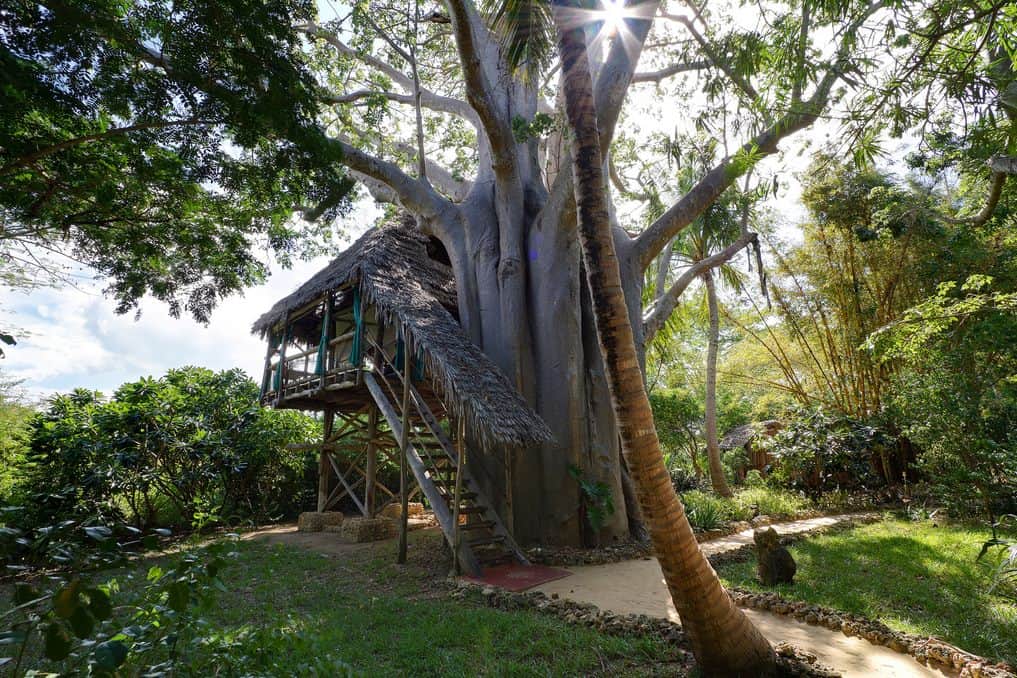
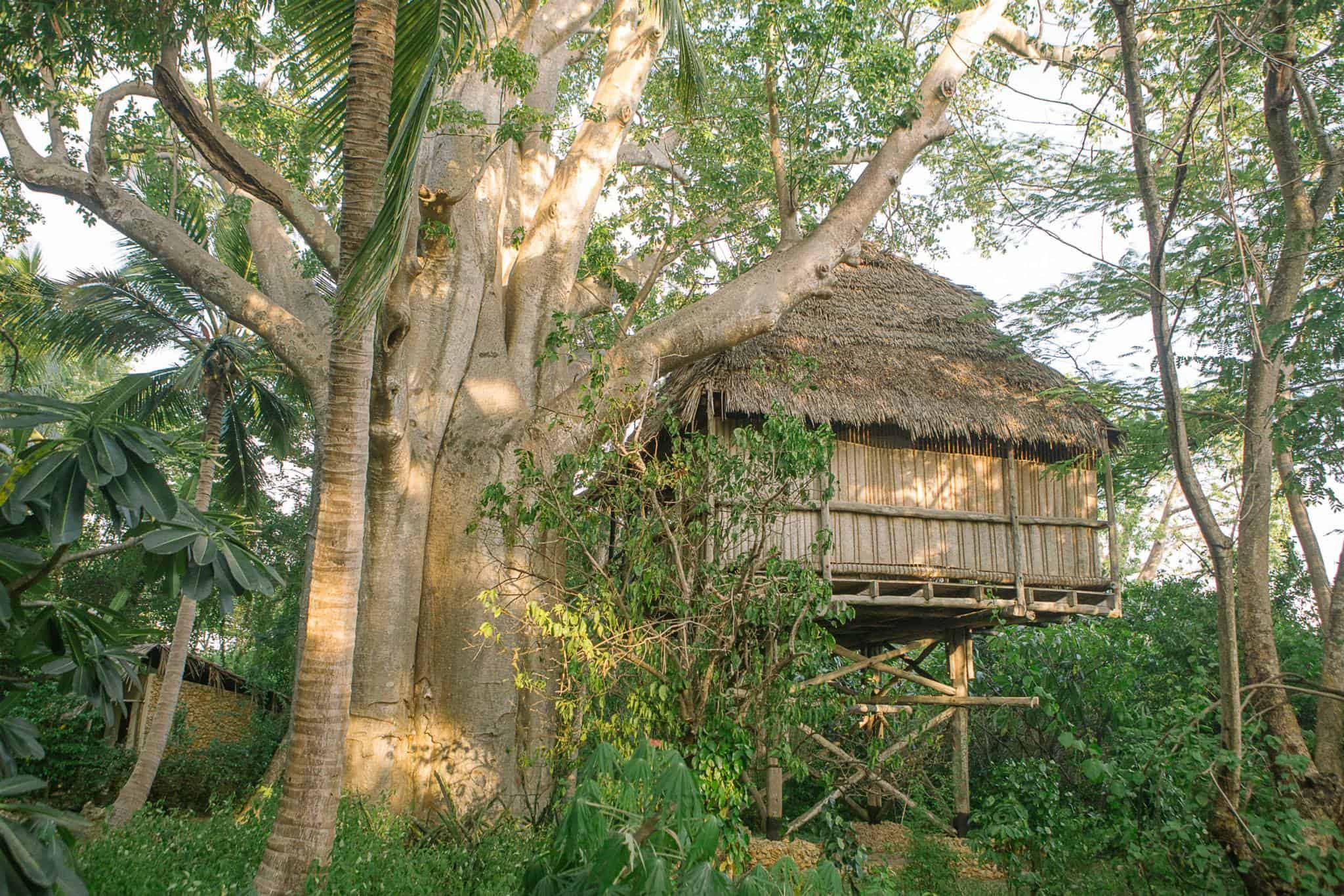
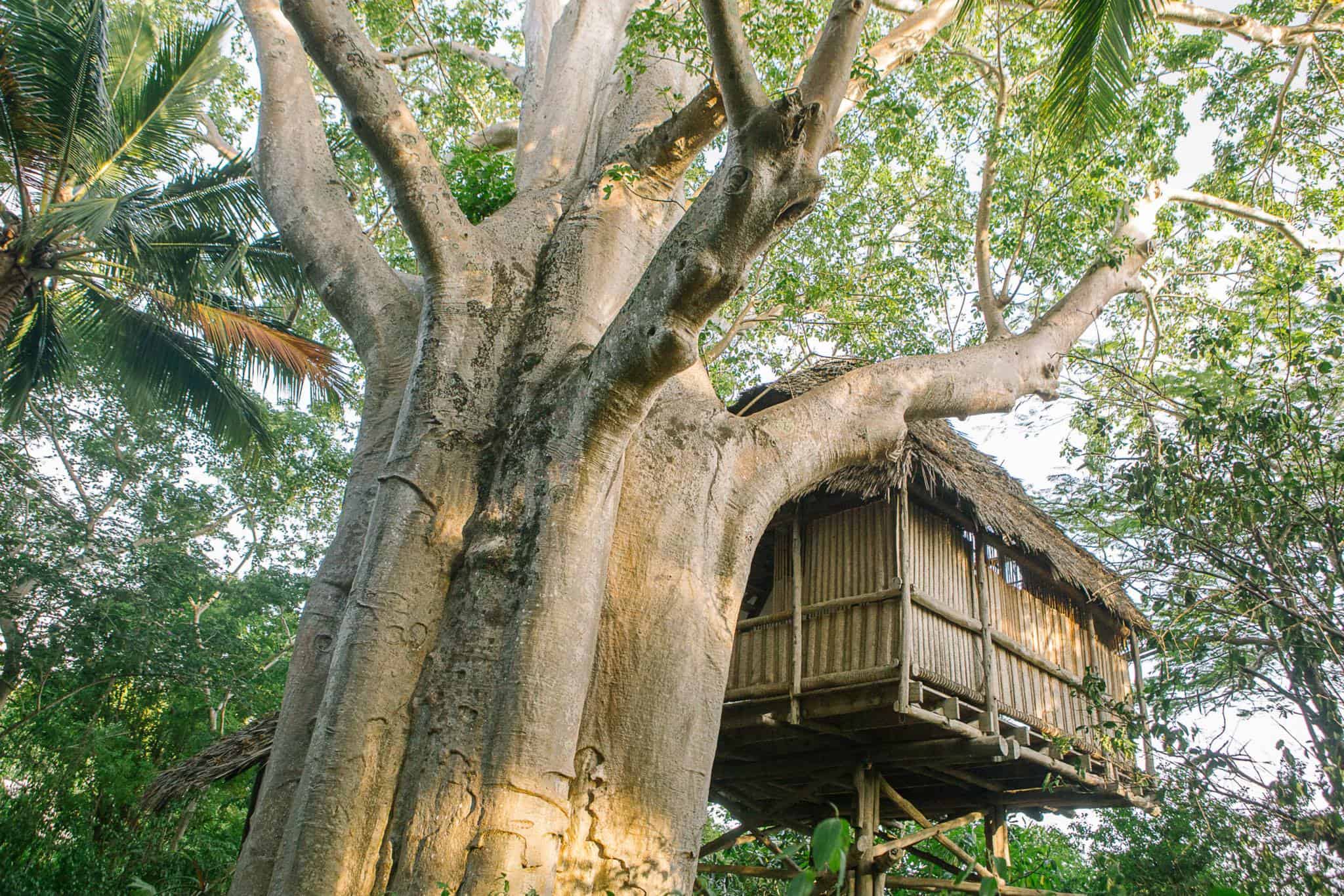
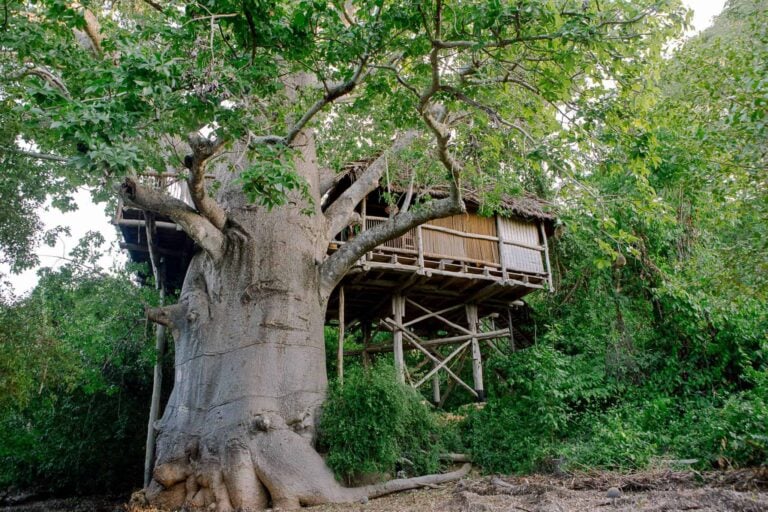
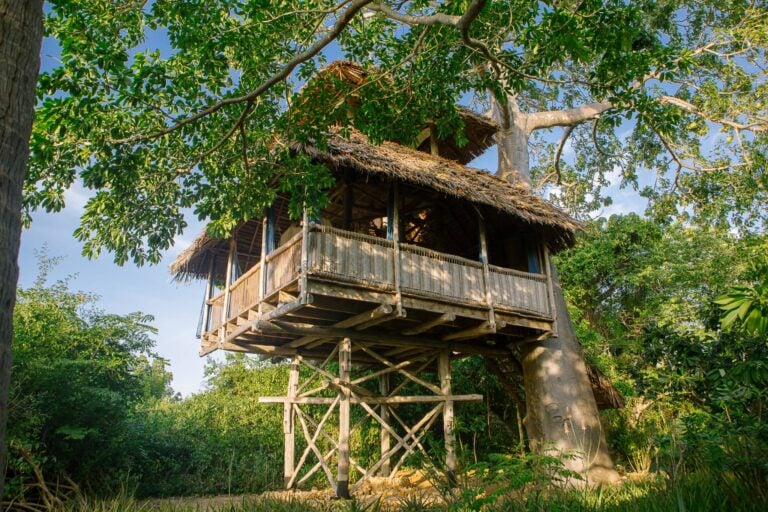
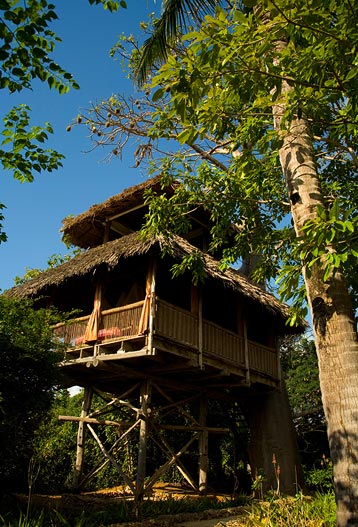
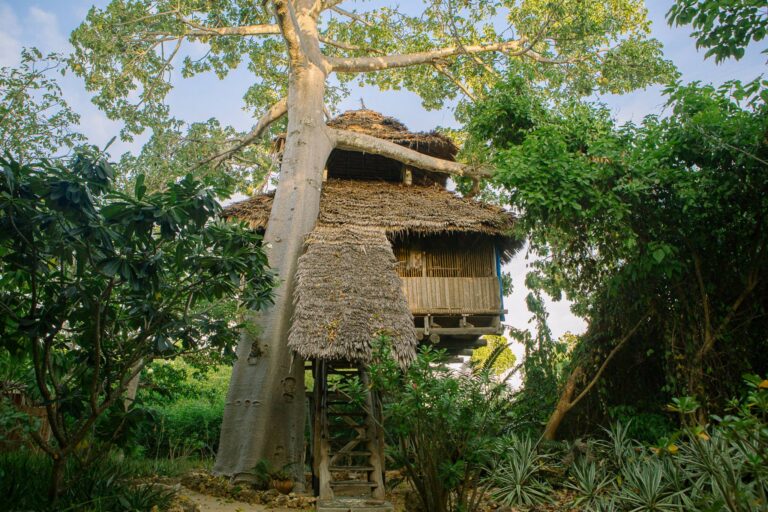
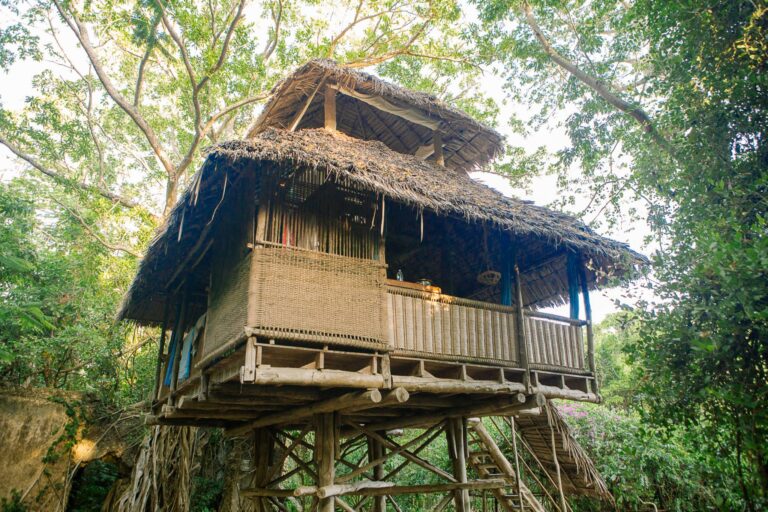
A baobab older than anyone on the island holds Mbili in its arms. Not metaphorically — the first treehouse built at Chole Mjini on Tanzania's Chole Island genuinely rises through and around one of these ancient, thick-waisted trees, spreading across two open tiers. From above, the channel below braids into pale sand maps at low tide and slicks to silver when the water returns. This is where the day calibrates itself.
Chole Mjini is a place that refuses to behave like a conventional lodge, and Mbili is its original act. Built first, it took close to a year to raise — timber sourced from the island's own traders, poles cut by hand, ferried by dhow, cured in sun, then shaped with tools requiring no electricity and great patience. The result carries that patience visibly. Joinery shows hand-rubbed edges and imperfect notches: not faults, but evidence of touch.
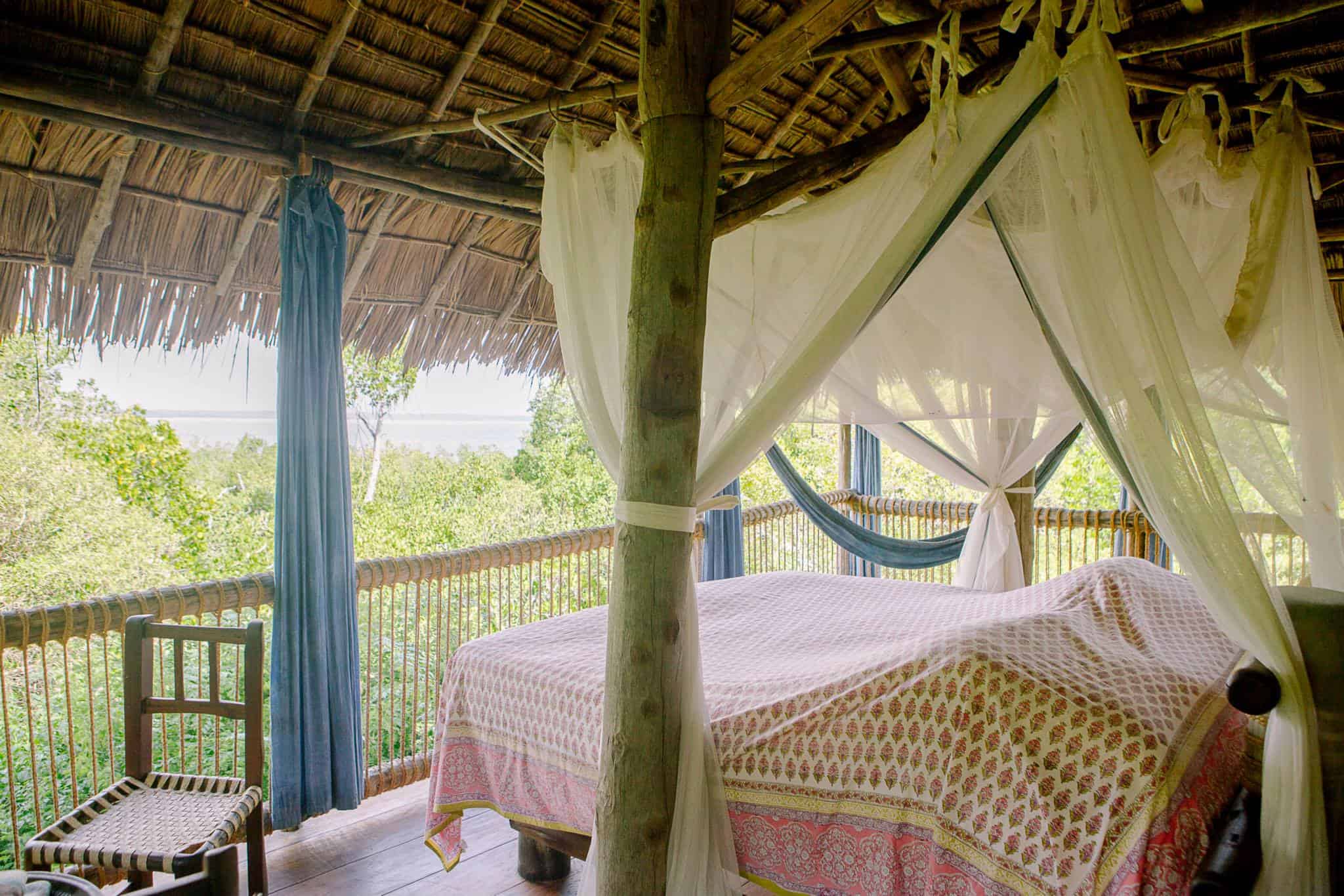
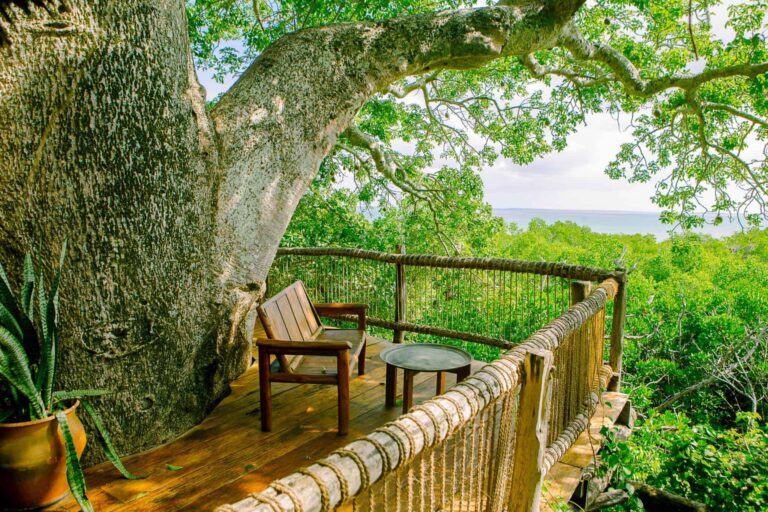
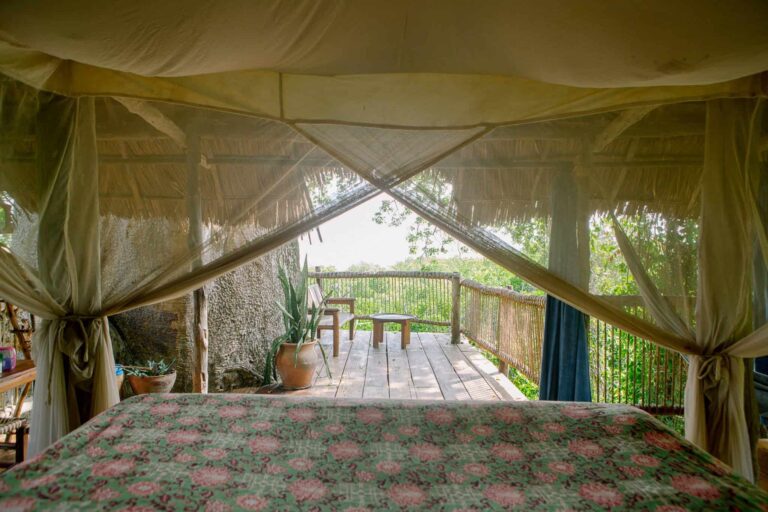
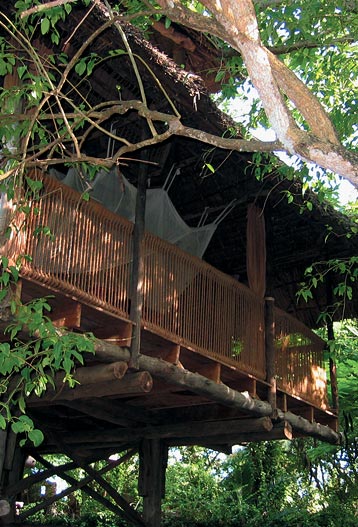
The layout feels intuitive once you're inside it. A shaded lower level suits slow afternoons and paperback chapters. Stairs curl upward to the second tier, where the horizon opens properly and the sea air moves through at its own pace. Two double beds, one on each level, sit under fine gauze — throne-like is the word often used, and it holds. Hammocks are strung wherever a branch offers a reason. Everything faces the bay.
Mbili's shower is partially outdoors, set in coral-stone with sun filtering through the canopy above. Lizards appear on the walls without embarrassment. It functions less like a bathroom and more like a clearing — a place where the body remembers it belongs to the open world. This quality extends through the whole treehouse: walls admit wind, eyes follow the water, and the baobab's own breathing joins the general rhythm of the place.
Chole Island sits within the Mafia Archipelago, reached by boat from Mafia Island itself. There is no road access and no airstrip on Chole — arrival is by water, which immediately frames the visit as a departure from ordinary life. The crossing sets the tone before a single shoe comes off.
The dry season from May through September brings cool, clear conditions ideal for wildlife in the surrounding waters and low humidity at night. Shoulder months in April and October stay warm and comfortable. The wet season from November through March turns the island lush and charged with birdlife, though the heat and humidity intensify. A Fish Eagle usually announces itself by call long before it appears over the channel. At dusk, fireflies thread the branches and the baobab's bark shifts to the colour of warm tea.
Nightly rates at Chole Mjini run approximately $450 to $550, varying by season and availability — a premium positioning that reflects both the remoteness of the location and the singular nature of the stay. Guests who come expecting standard resort amenities tend to leave confused. Guests who come ready to listen to a tree find the island answers back in its own time.
Frequently Asked Questions
Q: What kind of structure is Mbili, and how does it feel to stay there?
A: Mbili is a two-tier open treehouse built around and through an ancient baobab on Chole Island, Tanzania. The lower level suits shaded afternoons; the upper platform opens to the horizon and sea air. Walls admit the wind, beds sit under fine gauze, and hammocks hang wherever a branch allows — it reads less as a hotel room and more as a place to slow down inside a living tree.
Q: How do you get to Mbili at Chole Mjini?
A: Chole Island has no airstrip and no road access. Arrival is by boat from Mafia Island, which is itself reached by small aircraft from the Tanzanian mainland. The water crossing is part of the experience rather than an inconvenience — it signals the transition clearly before you arrive.
Q: When is the best time to stay at Mbili?
A: The dry season from May through September brings cool, clear nights and low humidity — generally the most comfortable conditions for sleeping open to the elements. Shoulder months in April and October stay warm and pleasant. The wet season from November through March turns the island lush and full of birdlife, though heat and humidity intensify. Confirm seasonal access with the lodge directly before booking.
Q: What are the nightly rates like at Chole Mjini?
A: Mbili sits in the premium tier, with nightly rates running approximately $450–$550. Rates vary by season and availability.
Q: Is Mbili suitable for guests who want air-conditioning, Wi-Fi, and standard hotel amenities?
A: Mbili is an open-structure treehouse designed to function with natural ventilation, not air-conditioning. The experience is intentionally immersive — guests sleep with the baobab and the bay rather than sealed away from them. Travellers who want reliable connectivity or resort-style facilities should check current amenities with the lodge, as Chole Mjini is a remote, off-grid setting.








Add a review