
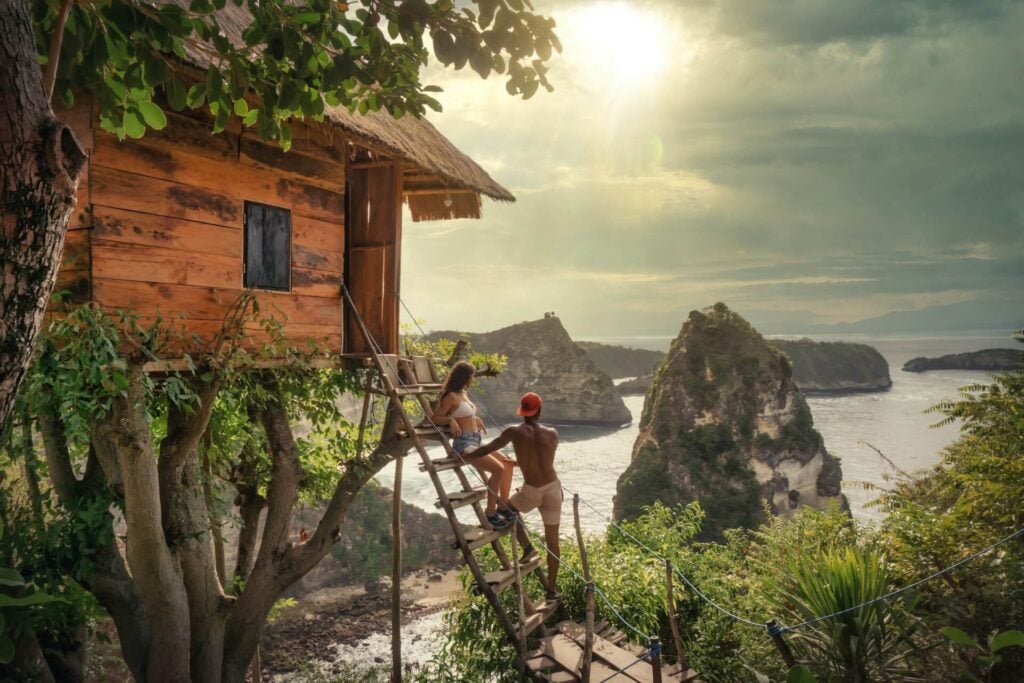
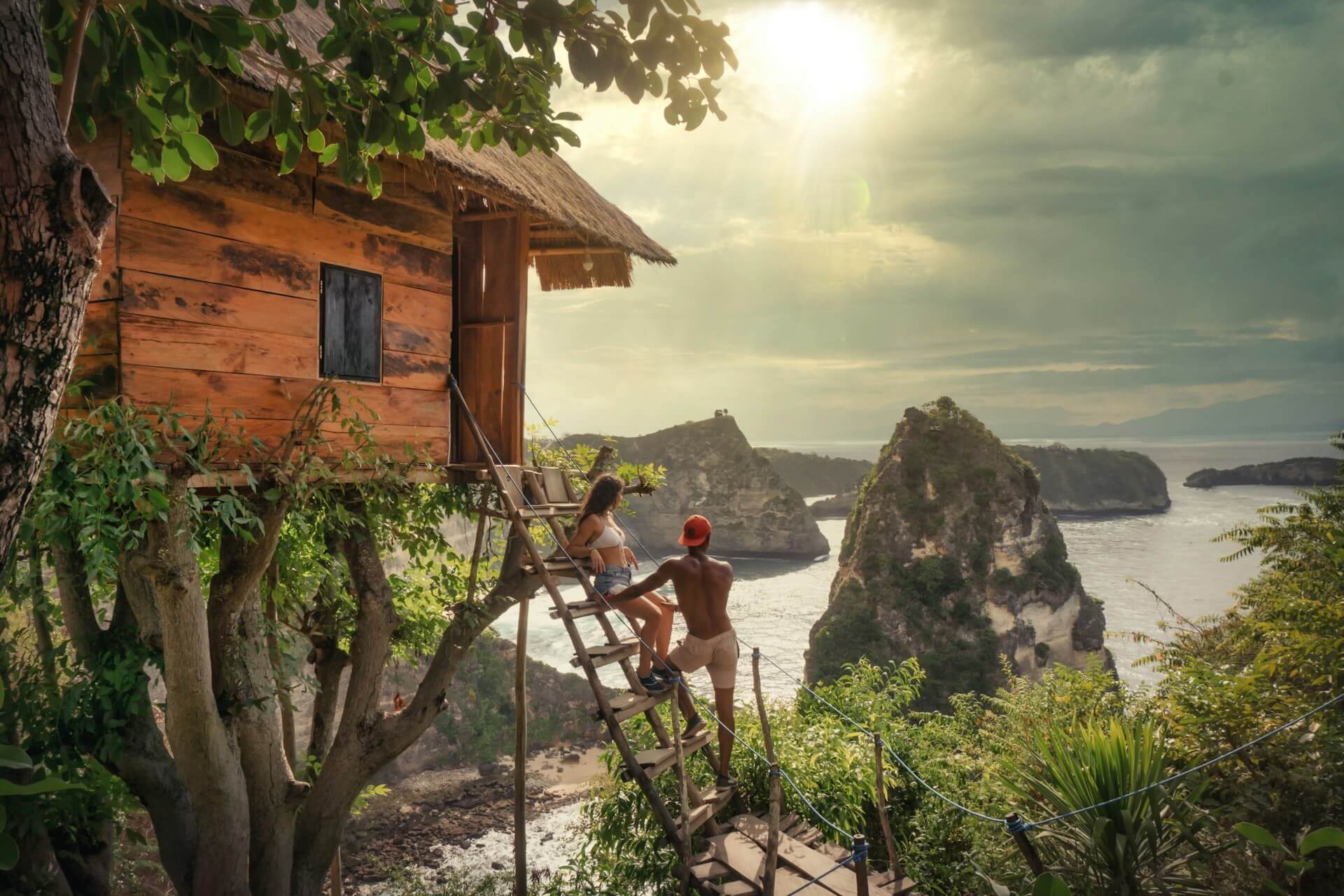
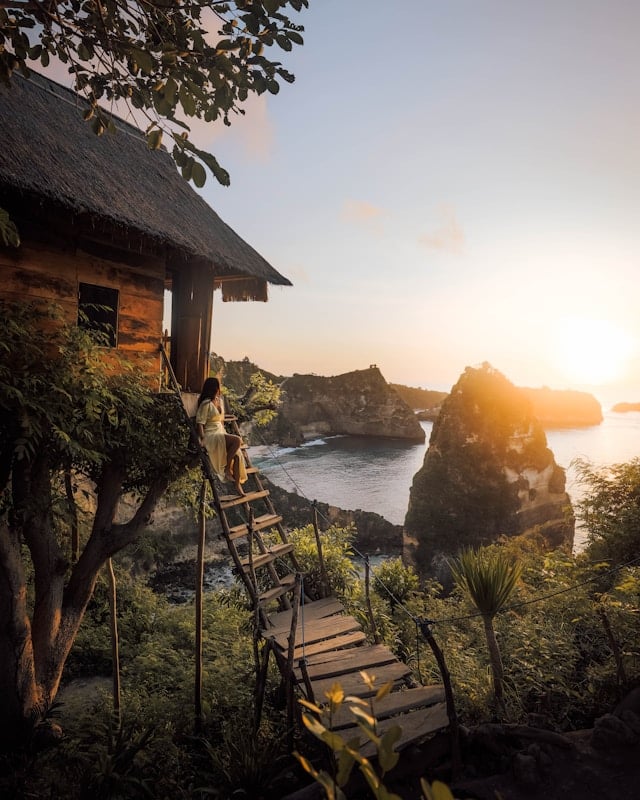
Rumah Pohon Tree House sits at the edge of a cliff on Nusa Penida's eastern coast, facing out over one of the most striking seascapes in Indonesia. From its elevated bamboo platform, the view takes in jagged limestone islets rising from brilliant turquoise water — the Thousand Islands panorama that draws photographers and early risers from across Bali. This is not a resort or an overnight retreat. It is a sunrise destination: a single cliffside treehouse that offers a brief, genuinely unforgettable encounter with the landscape.
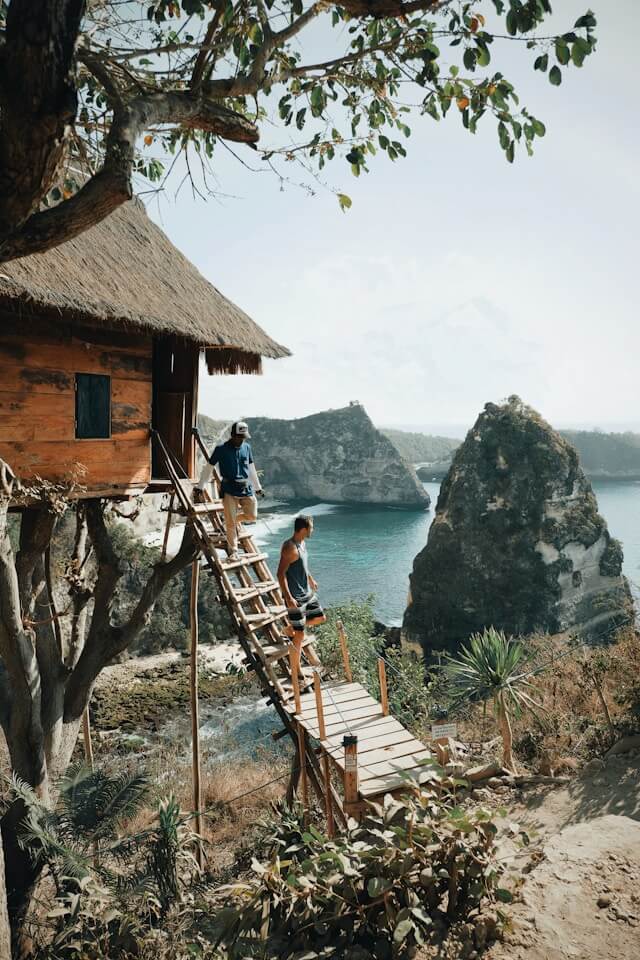
Reaching it requires planning. Most visitors take a fast boat from Sanur Harbour in Bali to Nusa Penida's north coast, arriving near the Banjar Nyuh or Toyapakeh area. From there, the road east to Rumah Pohon is twisty, hilly and occasionally rough — conditions that suit a hired driver more than a solo scooter rider unfamiliar with the island. At the parking area above the site, a small entrance fee covers access to the trail. The path descends via wooden stairs, taking roughly ten to fifteen minutes, with cliff-edge views opening up along the way.
The treehouse itself sits at the end of the trail, perched to catch the first light over the eastern horizon. At busy periods, a local attendant manages the queue and helps visitors climb up. Time in the structure is limited — around two minutes at peak hours — but the experience is concentrated rather than thin. The bamboo platform shakes gently underfoot, the breeze comes off the water, and the view does most of the work. Closed shoes and a bottle of water are sensible; the return climb back up the stairs in the heat earns its reputation.
The interior is minimal — a mattress and a fan reflect its origins as an overnight stay. Overnight access is no longer permitted, so the treehouse functions now as a viewpoint with an unusual vantage point rather than a place to sleep. That shift in purpose suits it well. Sunrise is the moment the site is built around, and arriving early rewards visitors with calmer conditions and a shorter queue.
Seasonal timing shapes the experience noticeably. The dry months from May through September bring clear skies, steady warmth and calm seas — ideal for the cliff views and the boat crossing alike. April and October offer a compelling alternative: warm temperatures, occasional light rain, and dramatic soft light that photographers tend to favour. The monsoon period from November through March brings fewer visitors and more atmospheric ocean skies, though the crossing and the trail can be wetter underfoot.
Rumah Pohon fits naturally into a longer East Nusa Penida day. The Thousand Islands Viewpoint, Diamond Beach, Atuh Beach and the cave temple at Goa Giri Putri all lie within reasonable distance and reward the effort of the journey from Bali. Starting with sunrise at the treehouse sets the tone for a day that moves through some of the island's most dramatic scenery.
This is a listing that suits photographers above all, along with anyone who wants a defining Nusa Penida moment rather than passive sightseeing. The effort is real, the time at the top is brief, and the view makes both entirely worthwhile.
Frequently Asked Questions
Q: Is Rumah Pohon Tree House an overnight stay or a daytime viewpoint?
A: Overnight stays are no longer permitted, so Rumah Pohon now functions as a sunrise viewpoint rather than a place to sleep. The bamboo clifftop platform is open to visitors during the day, with the early morning hours drawing the most visitors for the eastward view over the Thousand Islands.
Q: What is the visit experience like once you reach the treehouse?
A: At busy periods, a local attendant manages a queue and helps visitors climb the bamboo platform. Time on the structure is typically brief — around two minutes at peak hours — but the panorama of jagged limestone islets rising from turquoise water over the eastern horizon makes the moment memorable. The bamboo shakes gently underfoot, so some comfort with heights helps.
Q: How do you get there from Bali?
A: The usual route is a fast boat from Sanur Harbour to Nusa Penida's north coast, arriving near the Banjar Nyuh or Toyapakeh area. From there, the road east to Rumah Pohon is twisty and hilly — a hired driver is a practical choice over a scooter for those unfamiliar with the island. From the parking area, a trail of wooden stairs descends to the site in roughly ten to fifteen minutes.
Q: When is a good time to visit?
A: The dry months from May through September bring clear skies and calm seas, ideal for both the boat crossing and the cliff views. April and October can be particularly rewarding for photographers, with warm temperatures and soft, dramatic light between the seasons. The monsoon months from November through March see fewer visitors and atmospheric ocean skies, though the trail and crossing can be wetter. Sunrise is the moment the site is built around regardless of season.
Q: What should visitors bring or wear?
A: Closed shoes are strongly recommended — sandals are poorly suited to the wooden stair descent and the return climb in the heat. Carrying water is sensible, as the uphill return is strenuous. Check the venue's current entrance fee and any access conditions before you go, as these details can change.













Add a review